Friday, 29 November 2013

Phasianus colchicus ( The Pheasant )

                                                                        The Pheasant.

The shooting season is well under way now with some shoots now shooting in the main blocks of woodland as well as the drives around the game cover crops and on the stubble's. The main quarry on all shoots is the Pheasant the biggest of our Game birds.
Although the Pheasant has been around for hundreds of years and most people would think is is a native species it was in fact introduced to this country by the Romans when they invaded our shores. It was brought over as a food source for the Roman Armies as was the Dormouse. According to legend the first record of an introduction into Europe relates to the story of Jason and the Argonauts who, in their search for the Golden Fleece entered into the valley of the river Phasis in the Colchis region of Georgia, east of the Black Sea coast - hence the Pheasant's name Phasianus colchicus.
The pheasant is one of our most easily recognised birds seen in the countryside, the cock pheasant in his multi-coloured plumage stands out where ever he's seen be it on a gate post or in a field of stubble he stands out for all to see. The pheasant is a ground feeding bird and roosts at night in trees. The males are polygamous and are often seen with a harem of several females during the breeding season. They nest on the ground, producing a clutch of eggs of eight to ten over a two - three week period from April through to June. It is not unknown however for nests to be found with many more eggs in than this, as the hen birds often forget where their nest is and you can find that more than one bird is using the same nest, the incubation period is about 23 - 26 days.
 Since it's introduction many new strains have been developed. This is because keepers and shoot owners try to present the guns with a sporting bird so faster, higher flying birds have been developed this of course has seen smaller and lighter strains with types like the Kansas, Michigan Blue Backs and the strain from Poland the Bazanty. Some of these bird strains have also been developed for their tendency not to stray, a big problem with some.
The Pheasants that we all know and recognise are those mentioned above but there are many other types of pheasant that are to be found and most of these you might see in Zoos and Private collections, there are others that can only be seen in the wild, here are a few photos of some of them.


The Golden Pheasant.
The Reeves Pheasant.


The Lady Amherst.
The pheasant has been responsible for the way our lowland landscape looks today, many of our woodlands were designed to accommodate this birds requirement and to make the sporting features on many big estates the success that they are. The shooting industry generates about £1.6 billion to the UK economy a year has created thousands of jobs and the pheasant makes up approx' 80% of the gamebirds shot, it offers a lean, tasty free range food source, what else can you say about this bird.


The above birds are the ones you are most likely to see when out walking in your local woodlands and hanging up at your local butcher/Gamedealer.




Saturday, 23 November 2013

Trees In Our Landscape.

                                                              Trees In Our Landscape.

The importance of the trees we see around us is often overlooked.Today most of us take them for granted with little or no knowledge of their importance. Trees for thousands of years have been a major influence in our lives ever since the human race was created. They provided fuel for our fires as they do now, early man made many weapons from them, throwing sticks then spears and eventually the bow. We made crude shelters from them, then as time progressed houses made from wattle, mud and straw, we hollowed out large tree trunks to make canoes and progressed to  large sailing ships and boats, timber was put to use in many forms.
An Early Dwelling.
A Much Later House Built Using
The Same Methods.


Making A Dugout Canoe.

A Galleon.


 When early man started to live in small Hamlets and Villages the site chosen for them was often near to or in wooded areas so that they could harvest the timber to build their homes, to provide fuel for their fires and for fences to protect their stock and to stop them from running away. As early carpenters began to build furniture they found that different trees had different properties, so it was that some types of timber such as Oak and Elm was used to make good quality chairs and tables etc while others were used for something else.

A Selection Of Oak Made
Furniture And Other Items.
I could easily write a book on this subject but lets get back to today. We are still dependent on trees in many ways be it for building, for fuel or even for the many fruits and nuts they supply that we eat. Most importantly they absorb the pollution in our air by removing the carbon dioxide and turning it into the oxygen we need to survive a process called Photosynthesis.


 Many of us like a tree in our garden or to be able to see them nearby, we love to go a walk in the woods, we take pleasure in their beauty. So the next time you see a tree take time to remember where would we be without them! Do as some people do and hug a tree.

Tree Hugging.

Trees.


Monday, 14 October 2013

The Salmon Run.

                                                                   
                                                                                    Salmon.

I spent a couple of hours on Saturday morning earlier this month at a weir on the river Dove hoping that the recent rains would have raised the river level enough to spur the Salmon waiting in the deep pool beneath the weir into action. Although one or two fish were seen trying to get over the weir, there is not enough water for them at the moment. It is around this time of the year that the Salmon run on the river begins in earnest but without a heavy rain fall, the fish can not get over the many obstacles that this river system has in place.


Salmon Leaping.
The Salmon have been making there way up the river system for several weeks now and they will be waiting for heavy rain falls to raise the river level to enable them to complete their journey from the North Sea to the upper reaches of the river Dove to the spawning grounds or the Redd's as they are referred to, an area of fine gravel beds where they can spawn. The Salmon having travelled through the North Sea to the Humber estuary near Goole, will make their way up the river as far as they can travel and then they will lay their eggs in a depression made in the gravel on the river bed with their tales. The hen fish will lay her eggs into the depression first and then cock fish will then try to cover the eggs with his Milt ( sperm ) in an attempt to fertilise as many eggs as he can. They will then cover the eggs over with more gravel, where they will remain until they hatch around 5 to 7 months later. When the eggs hatch they are known as Alvin's. As they grow and develop, the markings on their sides become more prominent and they are then referred to as Parr. During this growth stage many of the thousands of eggs laid will have already been lost to predation by birds, other fish and larvae of dragon flies and other predators. The young salmon will remain in the river system until the time comes for them to make there way out to the open sea, on there way they will be met with many more obstacles that will reduce even more the number of young salmon on this long and treacherous journey. Over the next year or two they will live in the sea and put on weight and grow into adult Salmon when they will then start their perilous journey to return to their birthplace to start this cycle of life all over again. Once the cycle has been completed the Salmon normally die as a result of having lost nearly all their body weight during their spawning activities and the fact they do not feed once they return to fresh water from the sea. It is believed that of every 8,000. eggs laid only 2 fish will survive to return back to continue the breeding cycle.


The above chart refers to the Atlantic Salmon but the life cycle of the fish in our rivers and the North Sea are the same.

The recent rain over the past few days has seen an increase in movement on the weir since my last visit. Rain entering the river system from the hills in the Peak District has swollen the river water and pumped in plenty of oxygen giving the fish a chance to get over the weirs and get through the fish passes like the one at Tutbury, boosting their chances of reaching the spawning areas further up stream.


Thursday, 3 October 2013

September Sunshine.


                                                                             September Sun.

What an absolutely beautiful late Summers day, this is the last Sunday of September as I set off with my dog for an afternoon stroll over the fields to some ancient woodland. The sun was at its highest, the heat felt on my head and neck. The breeze was most welcome as I walked out in the open. My little Cocker Spaniel was searching through the cover as we crossed through the pasture and the new plantation, his nose to the ground searching for the scents drifting over the ground of any passing Rabbit, Hare, Pheasant or Partridge.
Overhead a Buzzard or two circled on the thermals created from the warm air as it rises upwards from the ground. A rabbit shot out as my dog entered some ground cover, I called him, he had a smug look on his face as if to say aren't I a clever boy dad.
As I carried on along the track towards the wood through the new plantation I noticed several Fairy Rings. They were once believed to have been made by Fairies or caused by lighting or where an animal, such as a horse, was tethered to a stake in the ground but the explanation, although more scientific and less superstitious or romantic is caused by the additional nitrogen that is released by the fungal underground mycelium of the network of fine threads that the fungi produce. According to country lore it is taboo to interfere with a fairy ring in any way, for fear of being struck dead and any young boys wishing to avoid being enticed into the ring to dance with the fairies, must wear their hats back to front as they walked by them.


A Fairy Ring.


With no further ado we entered the ancient woodland reckoned to be over 300 years old. A Tawny Owl called out from a nearby tree and a Jay flew into the trees disturbed by my dog, as it was collecting acorns. As I walk along I wonder if I am perhaps walking in the footsteps of Robin Hood or where Kings and other nobles once hunted the deer and wild boar that once lived here.
Many years ago it was thought that these woods once had herds of wild cattle in them that were hunted for their meat. It is said that Earl De Ferrers a Norman Knight who came over with William the Conquer herded up some of these cattle and put them in the Great Park he created at Chartley Castle, where you can see the remains from the road as you travel to Stafford from Uttoxeter through Loxley, where Robin Hood is said to have come from. Walking on through the fallen acorns and the newly fallen leaves, signs that Autumn is now with us, as I walked on through the wood I looked at the different trees that are there. The Old Ancient Oaks that still survive after hundreds of years, the Beech Trees and Ash that make up this truly amazing beauty spot. I walked through the wood and out into the old pasture, an open area where even now cattle graze and feed on the fallen Crab Apples from the trees that have been there forever. The cattle that once grazed here were the Aurocs and the descendants of these cattle that were herded up and driven to Chartley can be seen grazing around the old castle ruins. These cattle became to be known as the White Park.


 A Chartley Bull.
A Herd of White Park.


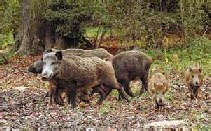
Wild Boar.


I sat down on the seat that looks out across the little Brook and over the valley, I took in all the sights the view presented me loving every breath I took as several Dragonflies dashed backwards and forwards around me. I had seen a few days earlier here a Red Tailed Kite circling overhead but it was not to be seen today.
Having rested for a while I set off along the footpath beside the wood for a short distance before taking the path back into the wood again and out on to the fields that took me back to the car park. My walk over, we got back into my vehicle to take the scenic route home. It was an enjoyable afternoons outing.


Oak Wood.
Oak Wood.


Tuesday, 1 October 2013

Coming Soon, Cooking With Jeff.


                                                                             Cooking With Jeff.

Today I spent this morning with an old friend of mine Jeff Thomas at the New Farm Cookery School, situated in the lovely countryside at Hanbury in the Needwood Forest. I have known Jeff for quite a while and I love his passion for cooking and trying his latest dish or creation. Jeff is a Masterchef and has won the title of Master Chef of Great Britain in 2011, something that he's very proud of as only 200 other chefs have been recognised at this level in the UK. Jeff is also a member of the Craft Guild of Chefs.

A Countryside Setting.

Jeff's latest venture is helping in the creation of the New Farm Cookery School working along with Chris Scarratt who is also an excellent Chef in his own right specialising in Patisserie and Chocolate artistry. Together they have set up the school of cookery at New Farm on Knightsfield Road near the village of Hanbury. They will be running various courses covering either one day, three days or a week. There are creative catering courses to suit everyone, from the amateur cook to a high calibre chef who wants to perfect their skills.  
                              
The school will also be offering Team Building and Corporate Events as well as catering for weddings and other functions.
                 
Dining Area.

In the very near future the cookery school will be making a regular visit on the Burton TV News website when each month the film crew will be there to record a cooking demonstration, giving all you would be cooks a chance to see a professional chef at work, preparing and cooking a different recipe on each visit. Jeff and Chris will be demonstrating their skills with many different recipes over the coming months giving you the chance to show off your cooking skills next time you are entertaining your own dinner guests. They will be selecting dishes from Meat, Fish, Poultry, Game and other recipes that you will be able to follow in your own home, so look out for the first program coming soon.

Master Chef Jeff Thomas.

Looking Out From The
Dinning Area.

Entrance To School.
Cooking Area.


Friday, 20 September 2013

HAVE FUN GUYS.


                                                                         HAVE FUN GUYS.

Forgive the pun but I could not resist. I am of course referring to Mushrooms or Fungi. I was out this morning with my dog not very far from the town and I was looking for Mushrooms, the first two or three fields I tried, although in the past have always provided me with a regular supply, have failed me this year. However it's still a bit early so I might find some in a few days time. The last field I walked over however did provide me with enough to have with my bacon and eggs on Sunday morning that's if the other half don't nick them first.


Fresh Picked Mushrooms.

Mushrooms are easy to find and sometimes you can see them from quite a distance as the light reflects off them. I have driven around the country lanes many times looking over the hedgerows and fences and spotted them growing out in the open. In the past I would just go and pick a few but now if you do not want to upset the land owner ask him first, he might say no or he might say yes and tell you where he has seen a better place to find them, whatever, do not pick them all it's only polite to leave some for somebody else and next year you can go back again, you might have made a new friend in the process.

Just one word of WARNING make sure you know what you are picking, there are many types of Fungi  and not all are eatable, so either get a good book or go with someone that knows what they are looking for. The National Trust sometimes take out groups on foraging expeditions and so do the Local Wildlife Trusts so keep a look out for any advertisements in the local press or on the local radio programs.

                                                                                RECIPES.

There are plenty to pick and choose from, they can be used on their own or in Pies etc, have a look on the internet for some fab ideas to try with yours.

And finally have fun guys.

Tuesday, 3 September 2013

Winter Is A Comming.


                                                                          Look Out Time.

September is now with us and summer's almost over, the days are getting shorter and the dark nights are drawing in. When the leaves on the trees start to turn and the Martins and Swallows start to gather on the phone lines, it's a sure sign that Autumn and Winter are on their way.


Swallows gather themselves ready to migrate.

 This years young Swallows and House Martins are high on the wing, strengthening their muscles ready for their long migration south over Europe to Africa where they will spend the winter months until their return next spring. As our summer visitors leave us, look out for the first of our winter visitors like the Fieldfare, Redwings, Waxwings and Robins. Yes I did say Robins, while we do see them all year round most of our Robins are migrants. There are of course many other birds that spend the winter here, especially Wildfowl; Ducks, Geese and Swans come here in their thousands and what is the common factor? Food and the weather.

Man is a Hunter Gatherer and just as the birds and animals of our countryside ready themselves for the cold months of winter, in times gone by so did we. Now is the time to go and look for all those free foods that can be found in our fields and hedgerows, time to start making Jams and other preserves that will help us through those winter months. Crab Apples, Blackberries from our hedgerows, Strawberries, Red and Black Currents, Raspberries, Gooseberries from our gardens and Apples, Pears, Plums and Damsons from our trees. I remember both my Great Grandma, my Gran and also my Mother all busy making jams and preserves to be stored and used over winter. Apart from what we could make from all of these fruits and berries many families in the past would have a couple of pigs and a few chickens in the garden, that they fattened up for winter, maybe a Goose or Turkey for Christmas as well. My Grandad who lived here in the town always kept a few chickens and pigs at the bottom of the garden. In the row of houses where he lived there was a block of Pig Sty's and a large boiler at the end of the block for the making of pig swill. Many the time I have as a child watched him make his brew of swill for his pigs and occasionally helped him with the process. Things have changed a lot since then and you can go to the corner shop and pick up a pot of jam or a can of fruit etc. and with our fridges and freezers you may say why bother. I say try making your own preserves they taste much better and there is the pleasure that comes from making them and teaching your children as well.

Cob Nuts.
Hazel Nuts.


Nutting, no not banging your heads together I mean gathering nuts for the winter and Christmas. There are plenty of nuts waiting to be gathered from our woods and hedgerow. I would go out collecting a selection of nuts for eating. My favourite is the Hazel nut and Cob nut but I would also collect the nuts from the Sweet Chestnut for roasting in the open fire or in the oven of the Rayburn. They taste lovely on a cold winters night taken with a sip of Sloe Gin or perhaps with a glass or two of homemade wine. I love Elderberry. Now I might be wrong in saying that the Cob nut and the Hazel nut are different but I have always been led to believe that they are both from the same family but are two separate varieties, the cob nut being bigger and only found growing in the South of the country. Philbert's is another name for the Hazel nut and it is believed that they were given this name because of Saint Filbert who died in 684 whose feast day in late August coincides with the ripening of the fruit. Another nut that is nice to eat and can be used in cake making is the Walnut,  I am lucky that I do have access to a couple of trees but I am sure that you could find a tree some where local where you may be able to gather a few.
So I hope I have given you some ideas and plenty to do, many recipes can be found on the Internet and in many good cookery books. One last word of warning, some people are allergic to nuts so always ask them before offering them to friends and family otherwise enjoy.

Now getting back to the birds, I do digress. With winter drawing nearer with all those birds looking for food, perhaps some of the nuts, fruits and berries you collected can just be put to one side to help feed those birds as the weather becomes much colder. Try putting a few berries in bags to freeze as they are then thaw them overnight to put out for the birds visiting your garden, it's surprising what turns up to feed at your bird table if you can offer a selection of fruits and seeds.

I do like to put pictures on my blog to go with what I am writing about but unfortunately on this occasion where I make reference to the pig sty's at the bottom of my grandparents house, on visiting their old home, although the buildings are still there, very little remains of what was once an unusual building to find behind a row of terraced houses in the middle of the town.